Thoughts on the reference body
As a dancer my body is my instrument of investigation, and it is therefore my starting point.
By using my body as prototype for my maps, I use a similar approach to the traditional practice using only one singular reference, which becomes the norm, „the body“. This reference in traditional anatomy and western medicine books is following the esthetic of ancient Greece or Leonardo da Vinci’s Vitruvian man: a white, slim, muscular and able-bodied man. My body is in fact not very different, but already a little step towards reapropriation.
This practice brings the question in which position the ‘reference’ body is represented. Again, I try to disrupt the conventional representation of the body, standing in a symmetrical schematized position, and I searched instead for another position, which shows my body in a looser, softer, more personal and casual way. This is my reference base map, which you will find in many places on the website.
In general the approach of using a single reference body for mapping is I think quite problematic, as it ignores the multiplicity, the situatedness, the uniqueness, and the subjectivity of bodies.
That is why I invite other bodies in the research, and invite you to join the archive and draw your own maps.


Thoughts on frontal mapping
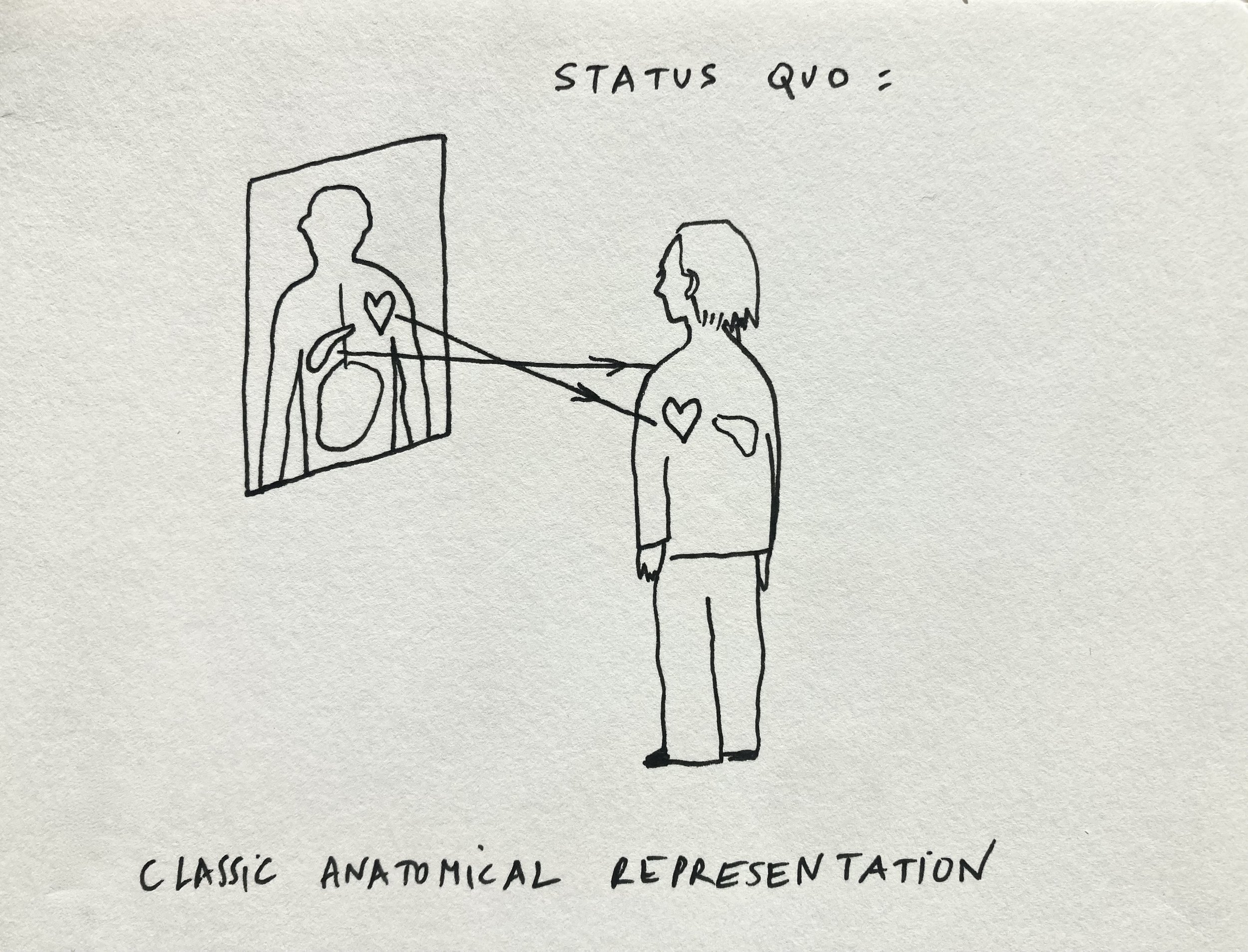
In most of the conventional representations, the body is shown from the perspective of someone looking at another body, which I think alienates the viewer from the picture, instead of taking their perspective.
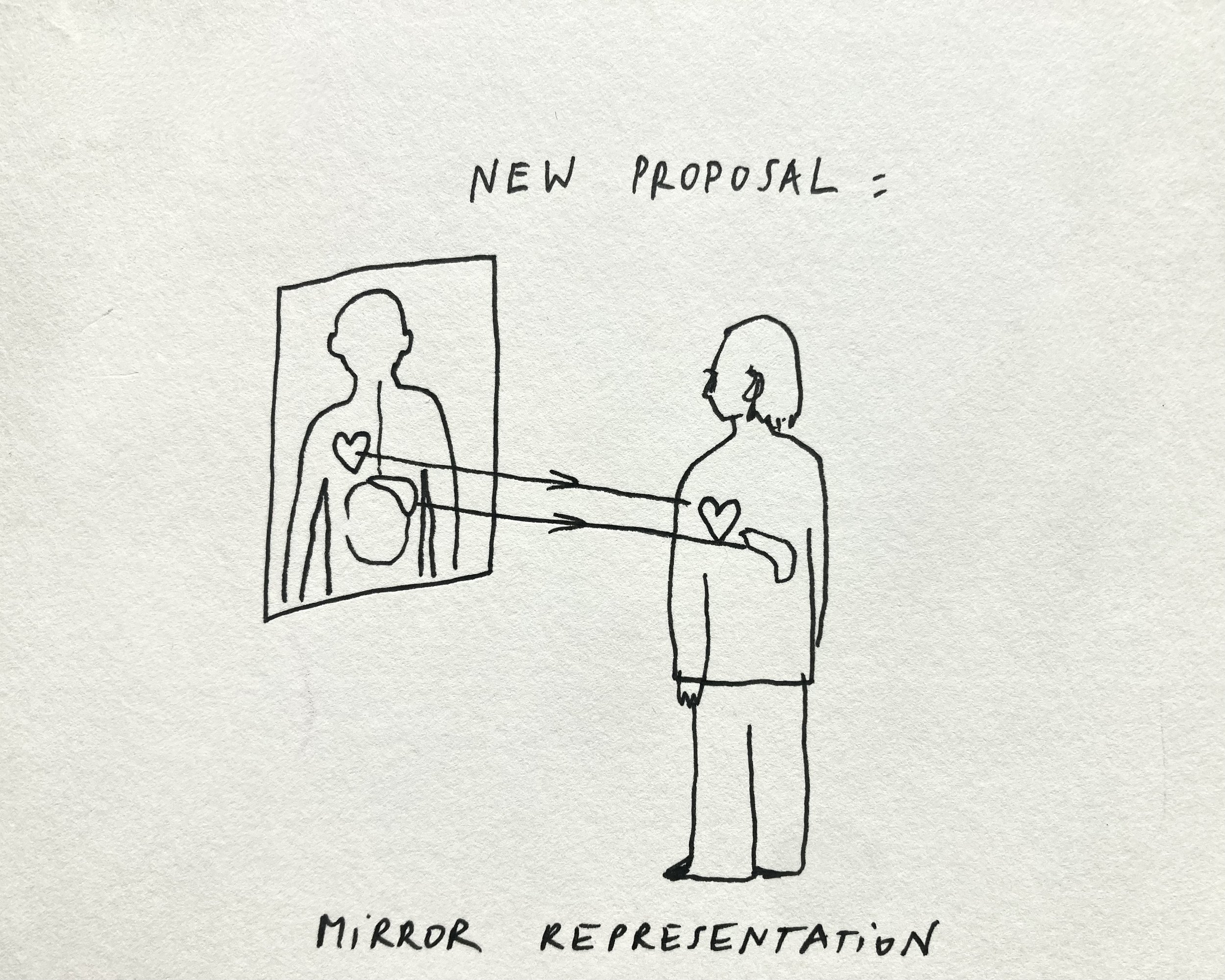
The viewer has to switch mentally the sides of the image to make the drawing fit their own body.
I think this might be a reason why I personally still have a hard time remembering on which side of my body my organs are. So I decided for all anatomical drawings to use a mirrored representation of the body instead of the conventional one, because I believe that way it is easier for our brains to transfer the image to our own body.